Table of Contents

Chapter 1 – THE PELVIC TILTING POSES 

Hints And Cautions 

Basic Standing Posture 

Reclining Pelvic Tilt 

Bridge Pose 

Cat Stretch 

Cat Stretch With Leg Lift 

Lower Back Stretch To Wall 

Chapter 2 – THE SHOULDER STRETCHING AND CHEST OPENING POSES

Hints And Cautions 

Shoulder Stretch With Chair 

Forearms On Wall Shoulder Stretch 

Shoulder Stretch On Counter 

Shoulder Stretch Kneeling To Wall 

Seated Shoulder Stretch 

Standing Shoulder Stretch To Wall 

Right Angle Pose To Wall 

Downward Dog Pose With Chair 

Downward Dog Pose 

Chest And Shoulder Stretch With Chair 

Chapter 3 – THE STANDING POSES 

Hints And Cautions 

Tree Pose 

Eagle Pose 

Alternate Leg Stretch With Chair 

Standing Alternate Leg Stretch 

Triangle Pose 

Warrior II Pose To Wall 

Warrior II Pose With Chair 

Extended Warrior II Pose With Chair 

Side Angle Pose To Wall 

Side Angle Pose With Chair 

Half Moon Pose With Wall 

Warrior I Pose To Wall 

Wide Leg Stretch To Wall 

Head To Floor Wide Leg Stretch 

Chapter 4 – THE FRONT HIP AND THIGH STRETCHING POSES 

Hints And Cautions

Hero’s Pose 

Hero’s Pose With Arms Overhead 

Half Reclining Hero’s Pose 

Reclining Hero Pose 

Reclining Alternate Front Thigh Stretch 

Standing Front Thigh Stretch With Chair 

Kneeling Front Thigh Stretch With Chair 

Kneeling Front Thigh Stretch 

Intense Front Thigh Stretch To Wall 

Seated Alternate Front Thigh Stretch 

Alternate Front Thigh Stretch With Chair 

Elevated Leg And Front Thigh Stretch 

Chapter 5 – THE SQUATTING AND HIP STRETCHING POSES 

Hints And Cautions 

Half Squatting Pose To Wall 

Supported Squatting Pose 

Squatting Pose To Wall 

Bound Angle Pose 

Hip Stretch With Feet On Wall 

Reclining Knee To Floor Pose 

Reclining Shin To Chest Pose 

Leg Over Leg Hip Stretch 

Shoulder Stretches In Leg Over Leg Pose 

Intense Hip Stretch 

Chapter 6 – THE HAMSTRING, CALF, & INNER THIGH STRETCHING POSES

Hints And Cautions 

Reclining Alternate Leg Hamstring Stretch 

Reclining Alternate Leg To Side Stretch 

Easy Hamstring Stretch In Chair 

Hamstring Stretch With Heel On Chair 

Seated Alternate Leg Stretch To Wall 

Seated Alternate Leg Stretch With Chair 

Seated Alternate Leg Stretch 

Standing Hamstring Stretch To Wall 

Seated Hamstring Stretch 

Seated Hamstring Stretch With Chair 

Seated Wide Leg Stretch To Wall 

Seated Wide Leg Stretch With Chair 

Wide Leg Stretch 

Wide Leg Stretch With Forward Bend 

Chapter 7 – THE TWISTING POSES 

Hints And Cautions 

Twisting Pose With Chair 

Revolved Foot To Thigh Pose 

Knee To Wall Twist 

Wide Leg Stretch With Twist 

Seated Bent Knee Twist

Chapter 8 – THE BREATHNG AWARENESS AND RELAXATION POSES 

Hints And Cautions 

Breathing Awareness Pose 

Child’s Pose 

Lower Back Relaxation Pose With Chair 

Legs Up Wall Relaxation Pose 

Back-Lying Relaxation Pose 

Elevated Leg Side-Lying Pose 

Side-Lying Relaxation Pose 

Chapter 9 – THE POSTNATAL POSES 

Hints And Cautions 

Knee To Chest Lower Back Stretch 

Elbow To Opposite Knee Curl-Up 

Curl-Ups With Feet On Wall 

Bridge Pose With Baby 

Shoulder stand With Chair 

Standing Hamstring Stretch With Chair 

Elevated Downward Dog Pose 

Seated Twist On Bench Or Chair 

Kneeling Twist To Wall 

Reclining Foot On Thigh Twist 

Pelvic Tilt Relaxation Pose With Chair 

Chest Opening Relaxation Pose 

Reclining Wide Leg Pose To Wall 

Reclining Bound Angle Pose 
Chapter 1

THE PELVIC TILTING POSES  

The proper positioning of the pelvis is the key to correct posture. The placement of the pelvis determines the curves of the spine. When the pelvis is correctly placed, the supporting structures above it will move into balance. All in all it is an awareness of good posture which will bring the whole body into alignment.

A normal back has four curves. They form an S shape. The lower back and neck are concave curves – they curve inward toward the front of the body. The tailbone area and the upper back are convex curves – they curve outward away from the back of the body.

The normal curves of the back insure proper spacing between the vertebrae of the back. Nerves branch out from the spinal cord and exit between the vertebrae. If the curves become excessive or flattened, compression of the nerves which pass between the vertebrae may result. 

Pregnancy tends to cause compression in the lower back. This compression is due to the weight of the growing uterus and the subsequent lack of abdominal muscle control. As a result, correct posture is distorted. This creates an excessive lower back curve. Reclining pelvic tilting poses will help alleviate this compression. The accompanying lower back pain will be relieved by lengthening the lower back muscles. 

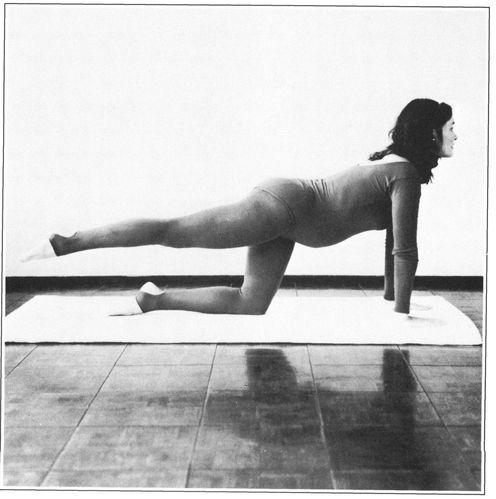
Pelvic tilting on hands and knees (Cat Stretch p. 4) may also relieve back pain and sciatica. The emphasis is on working the abdominal muscles against gravity. This hands and knees position may also be used in labor to relieve backache.

Hints And Cautions

Pelvic tilting poses may be performed during all three trimesters of pregnancy. However back-lying pelvic tilts should be limited to the first trimester. 

After the fourth or fifth month a pregnant woman lying on her back may become uncomfortable, dizzy, or even nauseous. This is due to the weight of the uterus pressing down on a vein called the vena cava. The vena cava brings blood back to the heart from the legs and pelvis. When it is compressed, blood volume to the heart decreases, blood pressure drops, and blood flow to the mother’s brain and the placenta is lessened. This causes temporary oxygen deprivation to mother and child. If this should happen, the mother would become light-headed. To stop the dizziness, she would need to roll onto her side and sit up.

The vena cava syndrome is most pronounced in the last trimester of pregnancy. Therefore, all back-lying poses are to be discontinued after the fifth month.

It is important to prevent straining the abdominal muscles during pregnancy. They are already being overstretched by the growing uterus. To avoid overworking these muscles when sitting up, roll onto one side, and use your hands to push yourself up to a sitting position. 

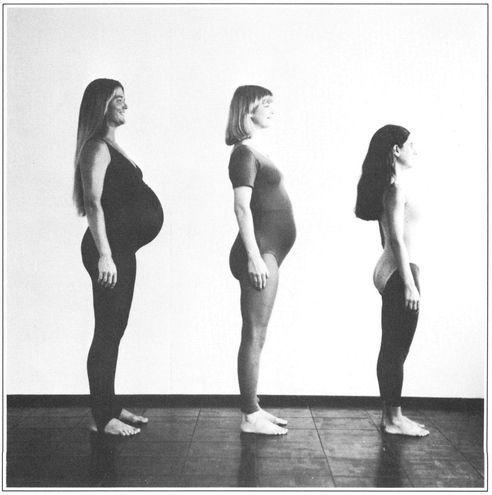
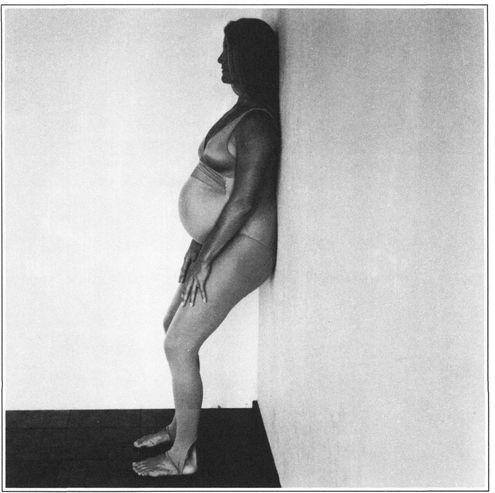
Basic Standing Posture

Stand erect with feet slightly apart and outer edges of feet parallel to each other. Distribute weight of body evenly over arches of feet.

Completely straighten legs by tightening front thigh muscles. 

To create horizontal alignment of pelvis, lift up front hipbones and move tailbone down toward floor. 

Lift breastbone up and slightly forward. Drop shoulders and relax arms. Lengthen back of neck and look directly forward. Ankles, hips, shoulders, and ears should be in line. Adjust standing position as pregnancy progresses.

Standing correctly improves posture and relieves lower back strain by balancing muscles and aligning vertebrae.

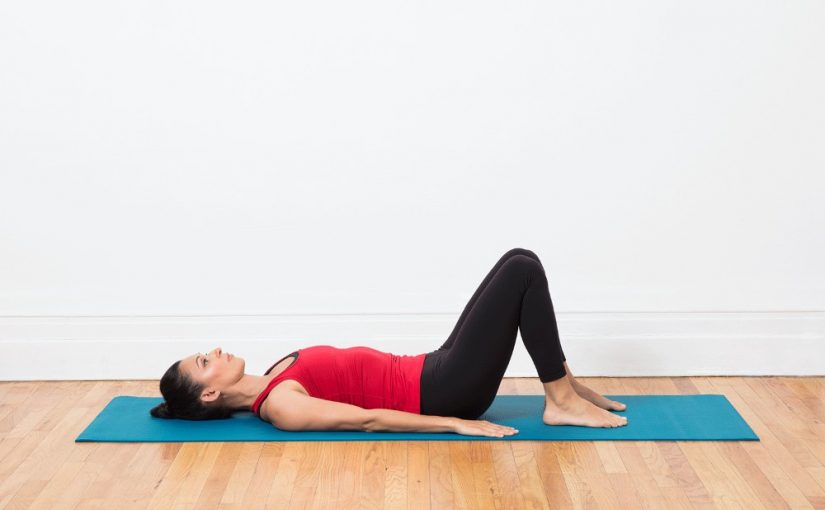
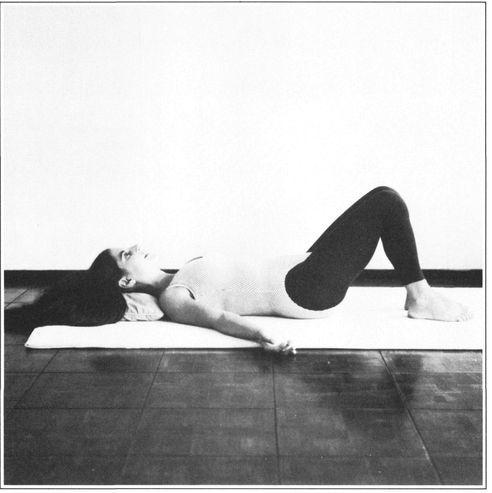
Reclining Pelvic Tilt

Lie on back on mat. Bend knees and place feet flat on mat. Feet are apart, parallel, and a comfortable distance from buttocks. Knees may relax inward until they touch. Extend arms at sides with palms facing upward.

Breathe in, lift chest, and allow lower back to arch and lift slightly off floor.

Breathe out, press feet firmly, and flatten lower back to floor. Tighten buttock muscles and let tailbone lift slightly off of floor.

Repeat pelvic tilt 5 to 10 times. Inhale and release lower back, exhale and press lower back to lengthen spinal muscles. When finished roll onto one side and sit up.

This pose relieves tension in lower back muscles. 

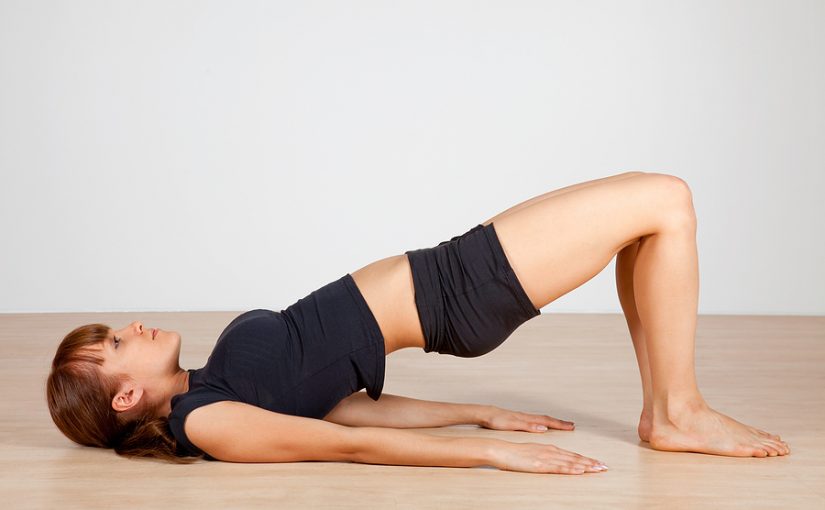
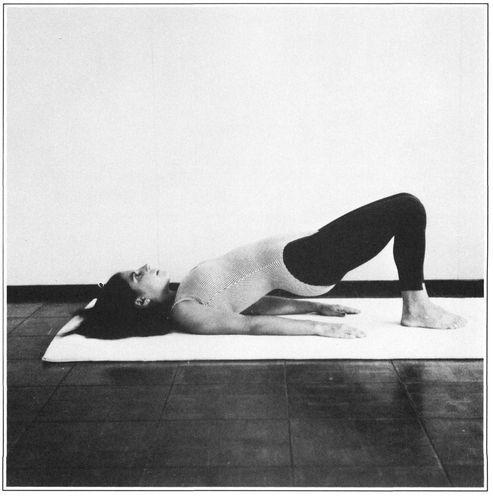
Bridge Pose

Lie on back, bend knees, and place feet flat on mat. Feet are apart, parallel, and a comfortable distance from buttocks. With palms down, stretch arms alongside body.

Exhale, press lower back firmly to floor. Inhale and tighten buttocks. On next exhalation, press down with arms and feet, lift hips off floor, and raise tailbone up- ward. Lengthen lower back while lifting. Breathe normally and hold. Roll down and relax.

Repeat 2 or 3 times. Curl tailbone off floor first, lift pelvis higher than abdomen, and squeeze knees together. Release, gently lowering upper back to floor first. Roll onto one side and push up to a sitting position.

This pose relieves lower back pain by strengthening abdominal and buttock muscles.

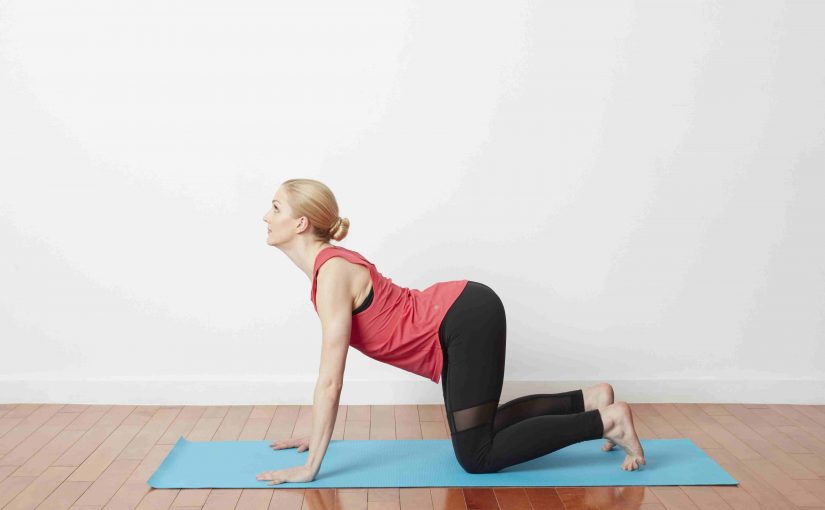
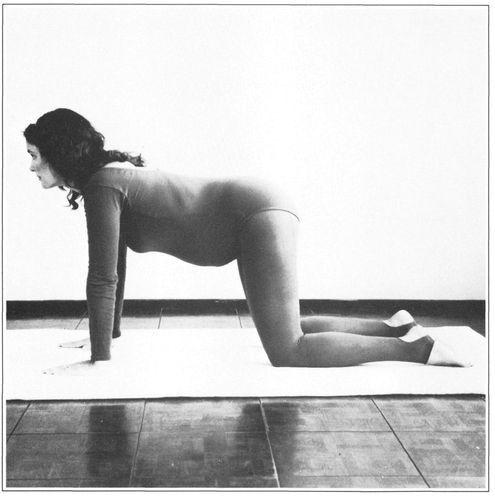
Cat Stretch

Kneel on floor. Position knees directly under hips and a few inches apart. Place hands in line with shoulders, fingers facing forward. Look straight ahead.

While inhaling, look up, lift buttocks, and descend lower back slightly. 

While exhaling, look down, tuck buttocks under, lift back, and allow upper back to round upward.

Repeat 5 times. Inhale and release back downward. Exhale and lift back upward. Keep arms straight. Release, sit back on heels, widen legs, stretch spine forward between legs, and rest forehead on floor. 

This pose releases lower back tension, and is excellent during back labor.

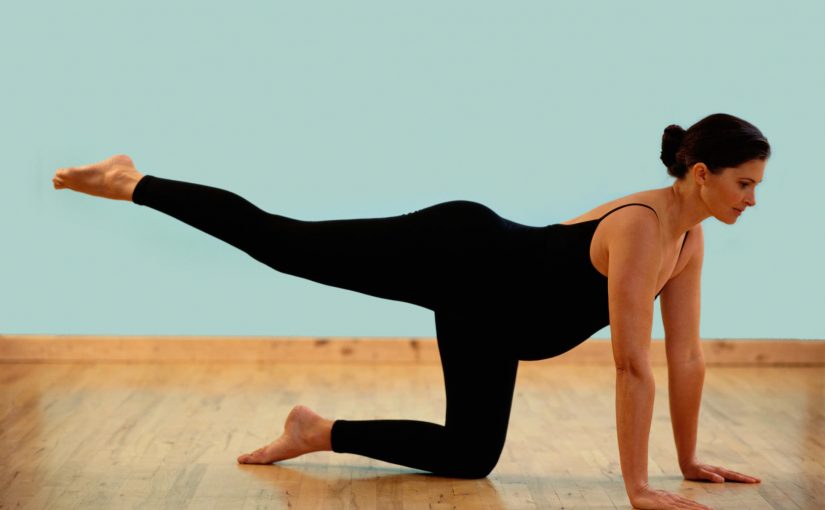
Cat Stretch With Leg Lift

Kneel on floor. Position knees directly under hips and a few inches apart. Place hands in line with shoulders, fingers facing forward.

While inhaling, look up, lift buttocks, tilt top of front pelvis downward, and allow lower back to descend slightly. While exhaling, look down, tuck buttocks under, lift back, and allow upper back to round upward.

Return to neutral position on hands and knees. Look forward and maintain natural spinal curves. 

Extend left leg on floor, turn toes under to stretch calf muscles. Lift leg off floor, hold, and alternately point and flex foot. Lower leg and repeat with right leg.

This pose strengthens back, buttock, hamstring, calf and shin muscles. 

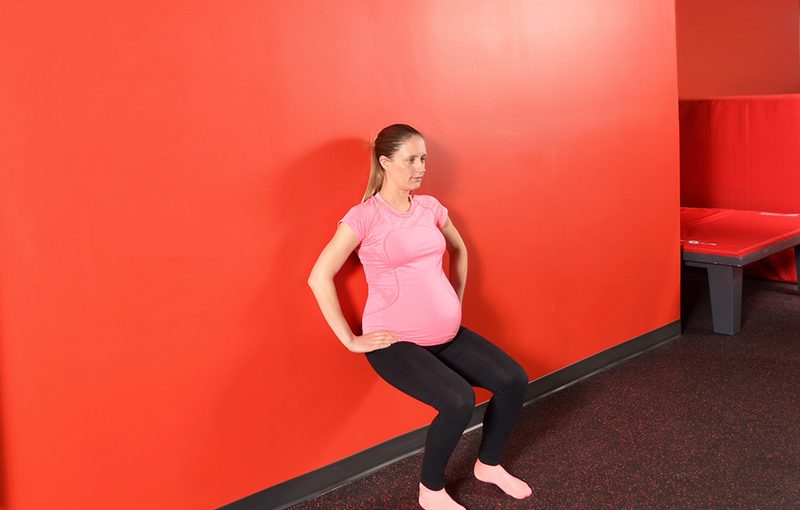
Lower Back Stretch To Wall

Stand with back to wall and position feet a few inches from wall. Separate feet, bend knees slightly, and rest hands on thighs. Feet are parallel to each other and knees face straight ahead.

Inhale and lengthen spine. Exhale, tuck tailbone under, and flatten lower back to wall. Breathe normally and maintain stretch of lower back against wall.

Use this resting pose frequently when back is tired. Hands may rest on wall, or interlock underneath abdomen, for support in last trimester. To strengthen thigh muscles, bend knees, lower buttocks until thighs are almost parallel to floor, and press lower back to wall.

To release, straighten legs, and stand in upright position. 

This pose relieves lower back fatigue and strengthens legs. 

Chapter 2

THE SHOULDER STRETCHING AND CHEST OPENING POSES  

Supple shoulders and a movable rib cage make free breathing in the chest pos- sible. Tight chest, neck, and shoulder muscles create tension. Stretching may temporarily relieve this tightness. However, chronic shoulder tightness during pregnancy may be due to incorrect posture or not enough exercise. Poor posture may be corrected by strengthening weak upper back muscles, loosening stiff shoul- ders, and expanding the chest. 

In poor posture the chest collapses, the shoulders round forward, and the upper back hunches over. These actions restrict the movement of the rib cage. As the pregnancy progresses, the space available for breathing becomes less and less. To breathe deeply, it is essential to allow the rib cage to expand.

The following shoulder stretches and chest opening poses will help correct faulty posture by strengthening the muscles which pull the shoulder blades down and together, and stretching the muscles of the rib cage. As the chest expands, the lungs gain freedom, and breathing deepens. 

After the baby is born, these poses will help relieve shoulder tension caused by nursing and carrying the baby.