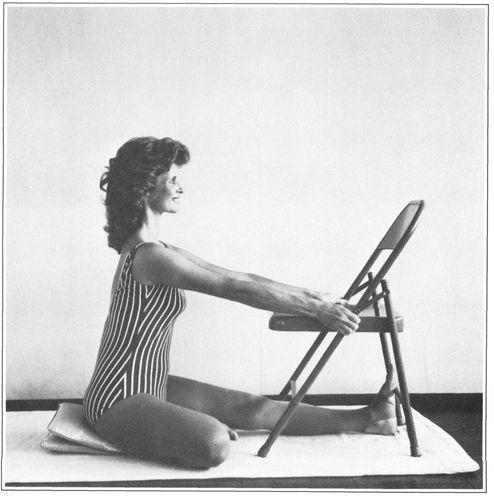
THE HAMSTRING, CALF, & INNER THIGH STRETCHING POSES
Tight hamstring muscles aren’t particularly noticeable until a pregnant women bends forward at the hips. Because tight back thigh muscles make bending forward difficult and even painful, most of the bend is taken instead by the flexible lower back. For the pregnant woman this means added strain on the back muscles. The lower back muscles are already overworked by having to support the growing uterus. Therefore, gradually stretching the hamstring muscles will relieve stress on the vulnerable lower back, and make freedom of forward movement possible.
The hamstring muscles on the back of the thigh are strong, stretch resistant muscles. They need to be worked patiently and consistently for maximum results. The hamstring muscles originate on the sitting bones (ischia) and insert below the knee on the lower leg bones (tibia and fibula). They cross both the hip and knee joints. Therefore, they are most intensely stretched when bending forward at the hips with completely straight legs.
The calf muscles are shortened by physical activities such as running, dancing, bicycling, and wearing high-heeled shoes. These tight muscles are particularly susceptible to cramping during pregnancy. Muscle cramping has many causes. Some are thought to be dietary. Another cause is poor circulation or pooling of blood in the legs. Cramps frequently occur at night, and calf stretches will help relieve them. At the first sign of a cramp, immediately flex the foot, draw the toes back toward the knee, and extend the heel.
Stretched inner thigh muscles may aid relaxation during labor. Learning to re- lease the inner thighs has the physiological effect of softening the muscles and the psychological effect of relinquishing fear.