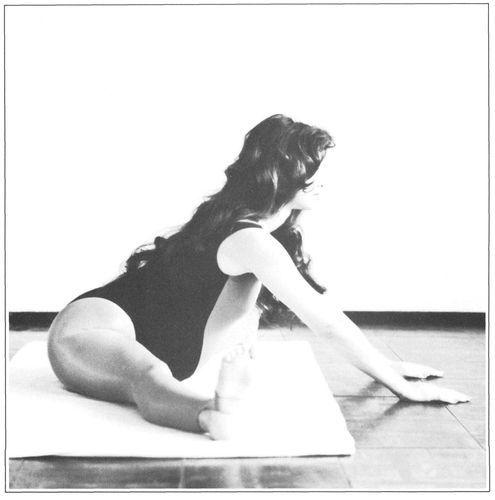
Seated Alternate Leg Stretch

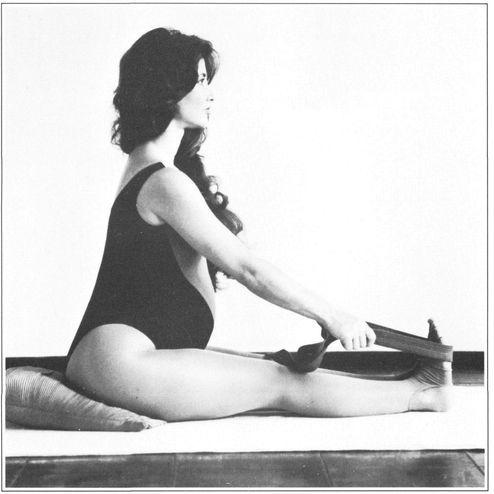
Sit on mat or rug with legs outstretched. Elevate buttocks with pillow if necessary. Bend right knee and place sole of right foot against inner left thigh.

Extend and straighten left leg on mat. Place strap around ball of left foot. Hold strap with both hands.

Inhale, lift chest, and elongate spine. Exhale, pull back on strap, extend heel, and bend forward from hips. While stretching torso forward, maintain normal curves of spine. If necessary move hands down strap closer to foot.

To reverse pose, bend left knee, and extend right leg. After stretching both legs, rest in a cross-legged position.

This pose strengthens back muscles and stretches calf and hamstring muscles.

Standing Hamstring Stretch To Wall

Stand with back to wall. With heels 6 inches from wall, separate parallel feet 10-12 inches. 

Bend forward from hips and place strap under soles of feet. Straighten both legs, stretch buttock bones toward ceiling, and tighten front thigh muscles.

Inhale, pull up on strap with both hands, and straighten elbows. Exhale, push buttock bones to wall, stretch chest forward, and elongate spine. Maintain normal spinal curves and rotate pelvis to bend forward. 

When spine is lengthened, release strap, bend knees, press lower back to wall, and relax leaning on wall. 

This pose relieves heaviness of uterus, stretches hamstring muscles evenly, and strengthens back muscles.

Seated Hamstring Stretch

Sit on rug or mat with both legs extended. Elevate buttocks with pillow. Feet may be separated.

Place strap around balls of both feet. Hold strap evenly with both hands. Sit up- right and look straight ahead. 

Inhale, lift top chest, and elongate spine. Exhale, pull back on strap, extend heels, and bend forward from hips. While stretching torso forward, maintain length of spine. If necessary move hands down strap closer to feet.

With each exhalation entire upper body rotates forward over hip joints. Feet may separate to accomodate growing uterus. To release, bend knees, sit in comfortable cross-legged position, and relax. 

This position stretches hamstrings and strengthens back. 

Seated Hamstring Stretch With Chair

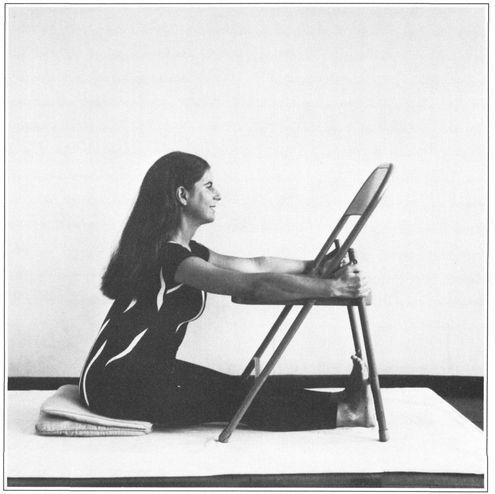
Sit on mat in front of chair. Elevate buttocks with small pillows or rolled blanket. 

Extend both legs under front chair rung. Hold sides of chair and draw chair closer until soles of feet touch back rung of chair. If necessary for comfort, separate feet a few inches apart.

Inhale, straighten arms, lift chest, and elongate spine. Exhale, extend heels, and draw toes toward knees. To increase stretch in hamstrings, bend forward from hips and hold back of seat or reach higher up on chair.

To release, bend knees, sit in a comfortable cross-legged pose, and rest forehead on pillows placed on chair seat.

This pose strengthens back and stretches hamstrings.

Seated Wide Leg Stretch To Wall

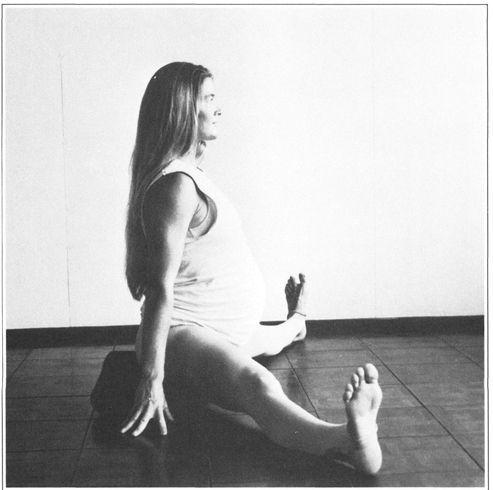
Sit on pillow or folded blanket facing wall. Widen legs and extend heels to wall. Place hands on floor behind hips, press down, elongate spine vertically, and stretch legs sideways. Keep knees and toes facing upward.

Place hands high up on wall. Press legs down, lift top chest and sides of body, and bend forward at hips. With each exhalation, extend spine and relax shoulders. Widen legs if pose becomes too easy. Press backs of knees firmly to floor.

To release, place hands on floor, ease away from wall, and rest in a comfortable cross-legged position with back to wall.

This pose stretches inner thigh muscles and increases circulation in pelvic region.

Seated Wide Leg Stretch With Chair

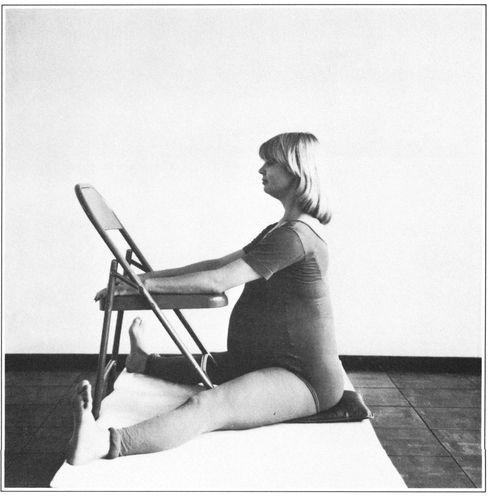
Sit on small pillow on floor in front of chair. Widen legs and place chair between legs a comfortable distance from abdomen. Rest forearms on chair seat. 

Press legs firmly into floor and extend heels. With each exhalation, press down with forearms, lift chest and stretch spine vertically.

Close eyes, relax face muscles, and breathe slowly and evenly. For further relaxation, place a pile of pillows on chair seat, move chair slightly backward, bend for- ward, and rest forehead and folded arms on pillows.

To release, move chair, and sit in a comfortable position. 

This posture provides a gentle inner leg stretch. It is especially appropriate during the third trimester. 

Wide Leg Stretch

Sit on folded blanket or pillow. Widen legs sideways, extend heels, lift kneecaps, and tighten front thigh muscles.

 Place hands on floor alongside hips. Press down with fingers, raise chest, and actively extend legs.

Concentrate on expanding chest with each breath. If stretch becomes too easy, gradually widen legs. Keep backs of knees pressed firmly to floor.

To release, place hands behind back, ease hips backward, bend knees, and gently bring legs together. Rest in a comfortable cross-legged sitting position.

This posture stretches inner thigh muscles and lifts and expands chest. 

Wide Leg Stretch With Forward Bend

Sit on rug or mat. Widen legs sideways, extend heels, lift kneecaps, and contract front thigh muscles. Press legs firmly down into mat, and stretch toes upward.

Lift sides of body and rotate forward at hips. Move spine as one unit by tilting top front pelvis forward. Legs remain firm as pelvis rotates forward in hip sockets.

Stretch arms forward on floor. Press down with palms and extend breastbone forward. Use straight arms to control forward movement. With each exhalation stretch legs and elongate spine.

To release, sit upright, and gently bring legs together. 

This pose stretches leg muscles and increases mobility of hip joints.

Chapter 7

 THE TWISTING POSES  

Twisting poses relieve a feeling of stiffness in the back. Gently twisting the torso massages the muscles along the spine and may help realign the vertebrae. Rotating the spine stimulates the nerves along the spinal column. With consistent practice, these postures may increase the ability of the spine to revolve. 

Twisting poses also stretch the muscles of the neck, chest, back, and outer hips. Stretching these areas by twisting creates a feeling of freedom in the upper body. Releasing tight muscles may help alleviate back pain and reduce neck tension. 

The depth of the inhalation of the breath depends on the ability of the rib cage to expand. Twisting poses also stretch the muscles of the rib cage and shoulder area. Stretching these muscles allows for greater expansion of the chest. This makes deeper breathing possible. 

Hints And Cautions

For maximum effectiveness, it is necessary to lengthen the spine while turning. If the spine is not elongated, the twist will be uneven. Coordinate the twisting movement with the breath. Lift the spine on an inhalation, and turn on an exhalation. Hold, take a few normal breaths in the new position, and then gradually increase the twist. Check to see that both shoulders are level. Allow the head to turn naturally. Forcing the head to rotate too far will strain the neck muscles.

During pregnancy twists should be performed gently to prevent overstretching. The majority of the twist will come from the neck, upper back, and shoulders. The neck can rotate approximately 45 to 50 degrees, and the upper back about 35 degrees. The lower back, designed mainly for side bending and forward and backward movement, is capable of only about 5 degrees of rotation.

The most vulnerable area is the sacroiliac joint, the joint where the sacrum joins the hip bone. This joint is designed for support, and it is supposed to remain stable. The sacroiliac joint is connected by strong ligaments. During pregnancy, the hormone relaxin loosens these ligaments. If twists are done forcibly, the sacroiliac joint may become unstable. This can happen on either side of the sacrum and may cause pain.